
How to Install a Starlight Headliner With a Sunroof (And Why It's Harder)
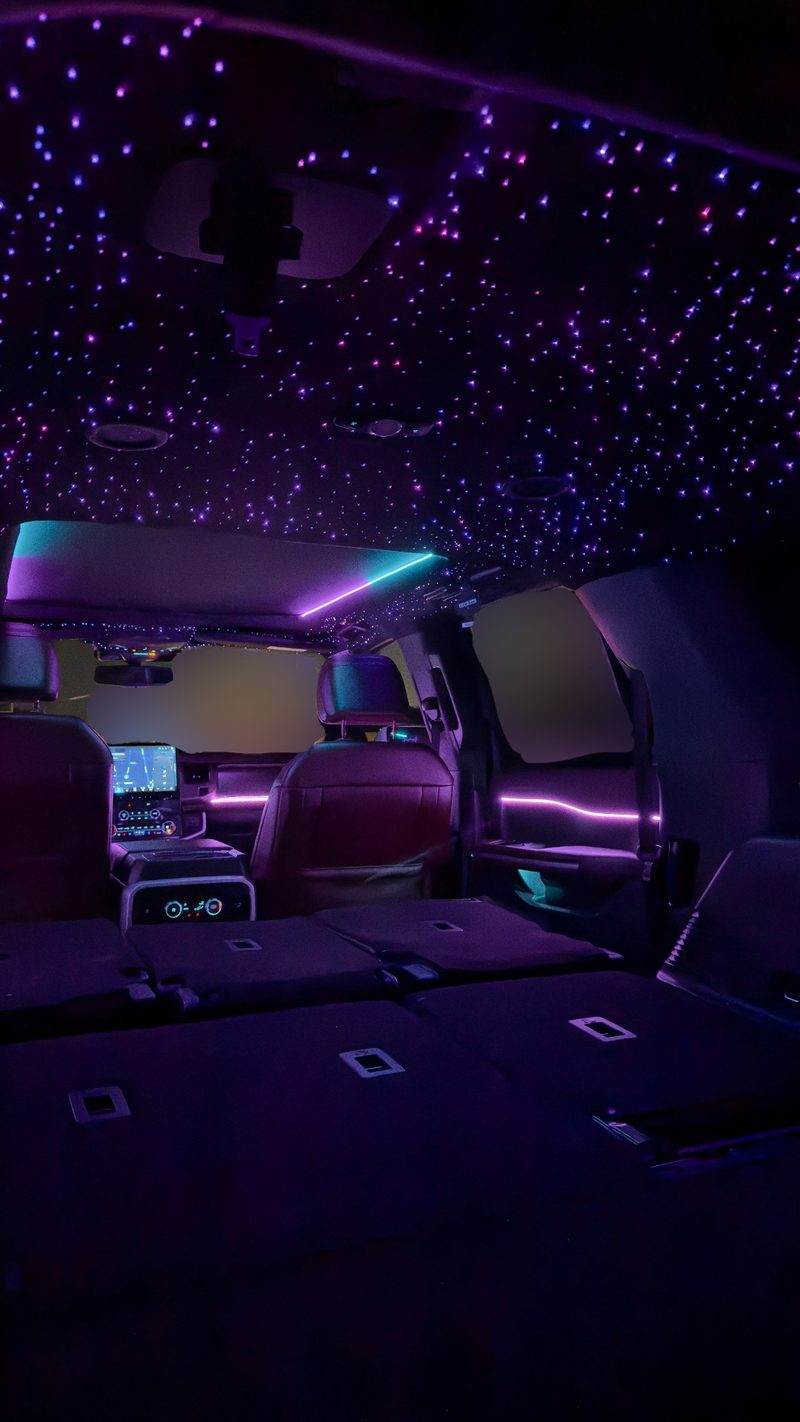
The most searched starlight headliner question online is how to install a starlight headliner with a sunroof — and for good reason. A sunroof (especially a panoramic one) removes a big chunk of the headliner canvas, adds a steel cassette and drain tubes you can't drill near, and changes how the fibre optic harness has to be routed. Here's exactly how a sunroof install differs from a standard one.
Why a sunroof makes the install harder
A sunroof cassette sits directly above the headliner board, so the space you'd normally use to hide fibre bundles and the LED engine is gone. Drain tubes run down the A and C pillars and cannot be pinched, taped over or drilled through — a blocked drain floods the footwell. And the headliner board itself is thinner and more fragile around the sunroof cut-out, so it cracks easily during removal if the panel isn't supported properly.
How the fibre gets routed around the cassette
Instead of a centre-run harness, the fibre bundles get split and routed around the perimeter of the sunroof opening, then fed back toward a hidden LED engine mounted in the A pillar, rear quarter or behind the rear headliner lip. Each bundle is loomed and secured so nothing rattles or contacts the sunroof motor. On panoramic roofs the star field usually becomes two panels — a front section and a rear section — feeding from a single engine so both sides stay perfectly colour matched.
Star layout on a sunroof car
You lose surface area, so density matters more than raw star count. A 600 star layout in a sunroof car looks denser than 600 stars in a full headliner because the same fibre is packed into a smaller area. We usually recommend keeping the count the same and tightening the pattern rather than dropping stars — and adding sunroof lighting strips so the glass itself is framed in light.
Sunroof lighting strips: the upgrade that makes it work
Sunroof lighting strips run an RGB halo around the sunroof glass and are controlled separately from the rest of the ambient zones, so you can leave the halo on while the stars are off (or vice versa). On large and panoramic roofs the strip kit is $200. It's the single best add-on for a sunroof car because it turns the sunroof from a hole in the star field into the centrepiece.
Should you DIY it?
Standard headliners are a realistic weekend DIY. Sunroof cars are not — drain tubes, glass alignment and cassette clearance are where DIY installs go wrong, and a cracked headliner board is a $400 to $800 replacement before you even start over. If you're set on doing it yourself, buy a kit with pre-terminated fibre and take photos of every clip before removal. Otherwise, professional install is the cheaper path once you factor in a failed attempt.
Frequently Asked Questions
Can you put a starlight headliner in a car with a sunroof?
Yes. Almost any vehicle with a sunroof or panoramic roof can get a starlight headliner — the fibre is routed around the sunroof cassette and the LED engine is hidden in a pillar or behind the rear headliner lip.
How hard is it to install a starlight headliner with a sunroof?
Significantly harder than a standard headliner. Expect 20 to 30 hours DIY versus 15 to 20, plus a real risk of cracking the headliner board or pinching a sunroof drain tube.
Do the sunroof strips and the stars turn on together?
No — sunroof lighting strips are on their own separate control, so you can run them independently of the stars and the rest of your ambient lighting.
How much does a starlight headliner with a sunroof cost?
Starlight installs are quoted per vehicle. Sunroof cars are priced per quote because of the extra routing work; sunroof lighting strips for large and panoramic roofs are $200 installed.
Ready to book your starlight headliners?
Serving Edmonton, Sherwood Park, St. Albert, Spruce Grove and area.